Chardham Yatra
Char Dham Weather Conditions
Planning Char Dham Yatra? Explore detailed weather updates, temperature trends, monsoon risks, and safest months for pilgrimage.
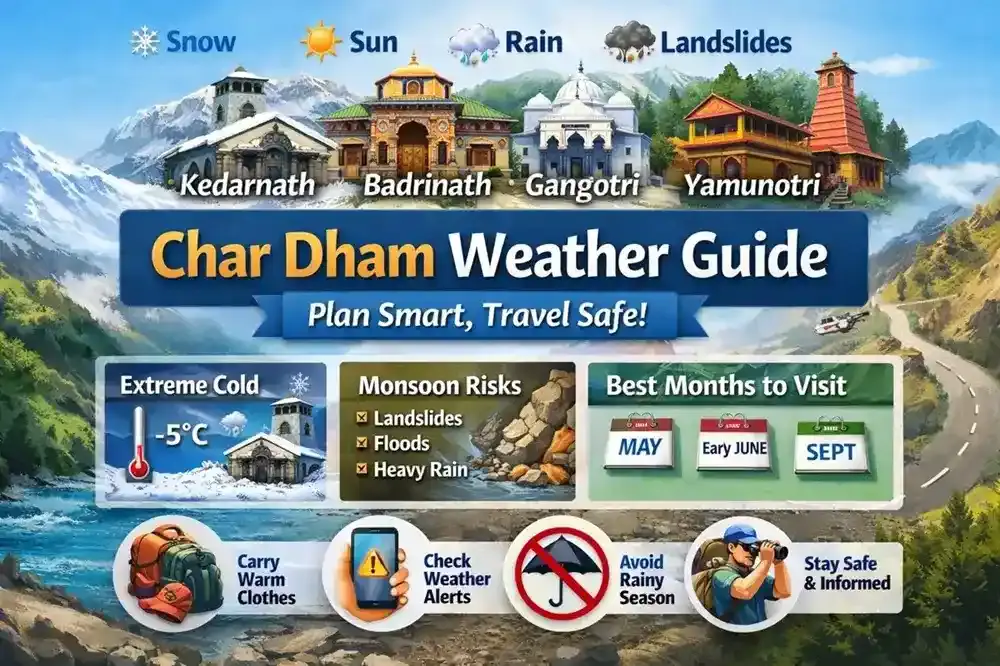
Planning Char Dham Yatra? Explore detailed weather updates, temperature trends, monsoon risks, and safest months for pilgrimage.
Planning Char Dham Yatra without understanding the weather is risky. Not inconvenient — risky.
The four sacred shrines — Kedarnath Temple, Badrinath Temple, Gangotri Temple and Yamunotri Temple — are located in the high-altitude Garhwal Himalayas of Uttarakhand. Weather here is not linear. It shifts fast. Morning sunshine can turn into afternoon rainfall. Clear roads can close overnight during monsoon.
If you understand the seasonal pattern properly, your yatra becomes smooth and stress-free. If not, even darshan timing, hotel bookings, and helicopter schedules can get disrupted.
Let’s break it down dham-wise and month-wise.
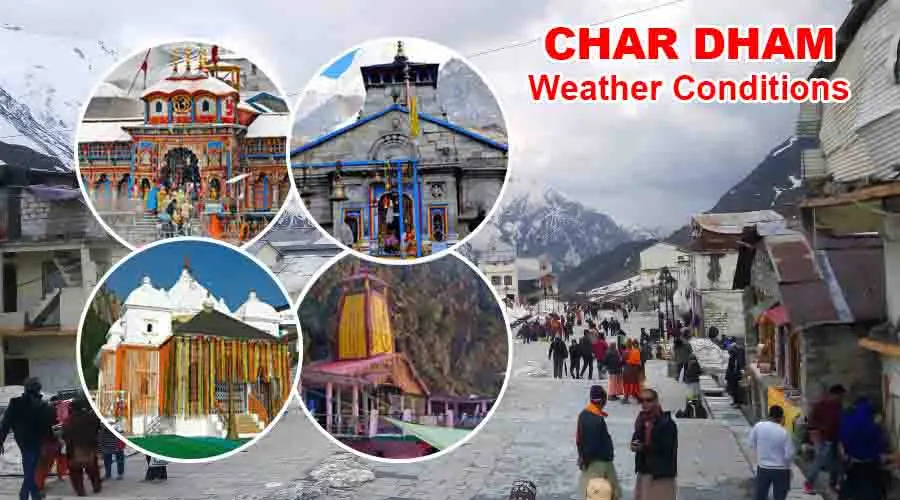
Kedarnath (approx. 3,583 meters) and Badrinath (approx. 3,300 meters) experience similar climate patterns due to altitude and location. Nights are colder than people expect, even during peak season.
During these months, the entire region remains snowbound.
Temperature often drops below 0°C
Heavy snowfall blocks routes
Temple doors remain closed
Pilgrimage officially suspended
The idols are shifted to winter seats as per tradition. No regular tourism operates in this period.
This is complete off-season.
April is a transition month. Snow starts melting and road restoration begins.
Temperature ranges between 5°C and 15°C
Cold mornings and evenings
Limited accessibility early in the month
Temple opening usually happens toward late April or early May depending on the Hindu calendar.
If visiting early season, thermal wear is essential.
This is considered the best weather window.
Day temperature: 7°C to 20°C
Clear skies (especially early June)
Stable road conditions
Full pilgrimage movement
May offers pleasant weather with manageable crowds. June is slightly warmer but more crowded. From practical experience, the first half of June is more stable than the last week when monsoon signals begin.
For families and senior citizens, this period is ideal.
This is the most sensitive phase.
Frequent rainfall
Landslide-prone stretches
Possible road closures
Helicopter delays or cancellations
Temperature remains between 7°C and 15°C, but comfort is not the issue — safety is. Kedarnath valley is especially vulnerable during heavy rain.
Travel during peak monsoon is not recommended unless necessary.
September brings clarity after rains.
Fresh greenery
Clear mountain views
Moderate temperature (7°C–15°C)
Less crowd compared to May–June
October becomes colder but still accessible.
Nights turn very chilly
Early snowfall possible by late October
Many experienced travelers prefer mid-September for peaceful darshan.
Gangotri and Yamunotri follow similar seasonal patterns but feel slightly different due to terrain. Yamunotri requires a 6 km trek, making weather even more important.
Heavy snowfall
Sub-zero nights
Trek routes blocked
Temple closed
Darshan is not possible.
Snow clears gradually. Weather improves during daytime but remains cold in mornings.
Temple gates generally open late April or early May.
This is the most favorable period.
Temperature: 10°C to 25°C
Comfortable trekking conditions
Clear skies
Full yatra movement
This window offers the safest combination of climate and accessibility.
Heavy rainfall in Uttarkashi region
Slippery trekking route (Yamunotri)
Risk of landslides
Temporary travel suspension possible
Pilgrims must check weather updates before travel.
Post-monsoon weather becomes stable again.
Clear views
Moderate cold
Lower crowd density
October gradually becomes colder and may see early snowfall.
Below is a practical side-by-side comparison of all four shrines:
| Month | Kedarnath | Badrinath | Gangotri | Yamunotri | Travel Advice |
|---|---|---|---|---|---|
| Jan | Heavy Snow | Snowbound | Snowbound | Snowbound | Closed |
| Feb | Extreme Cold | Extreme Cold | Snowfall | Snowfall | Closed |
| Mar | Snow Melting (Late) | Snow Melting | Very Cold | Very Cold | Closed |
| April | Cold (5–15°C) | Cold | Cold but Improving | Cold but Improving | Opening Prep |
| May | Pleasant (7–18°C) | Pleasant | Ideal | Ideal | ✅ Best Time |
| June | Stable (10–20°C) | Stable | Warm & Clear | Warm & Clear | ✅ Excellent |
| July | Rain Starts | Rain | Monsoon | Monsoon | ⚠ Risky |
| August | Heavy Rain | Heavy Rain | Heavy Rain | Heavy Rain | ❌ Avoid |
| Sept | Clear & Fresh | Pleasant | Stable | Stable | ✅ Very Good |
| Oct | Cold | Cold | Cold | Cold | Manageable |
| Nov | Snow Begins | Snow Begins | Closed | Closed | Closed |
| Dec | Snowfall | Snowfall | Snowfall | Snowfall | Closed |
If we compare practically:
Coldest Overall: Kedarnath
Most Stable During Season: Badrinath
Most Weather-Sensitive Trek: Yamunotri
Best Visual Experience: Gangotri in September
Based on safety, comfort, and accessibility:
May
Early June
Mid to Late September
Late July
August
November to April
From ground-level travel coordination experience, early June and mid-September offer the best balance between stable weather and manageable crowds.
Suggested Tour:
Pilgrimage and helicopter travel expert with over 20 years of experience planning Chardham, Kedarnath and Himalayan yatras.
Helicopter seats, darshan help, stays and transfers handled by one team.

A few details and our yatra expert will get back to you.
Your enquiry is ready. Send it on WhatsApp and our yatra expert will reply shortly.
Send on WhatsAppOr call +91-98979 16148