Last Updated on February 17, 2026
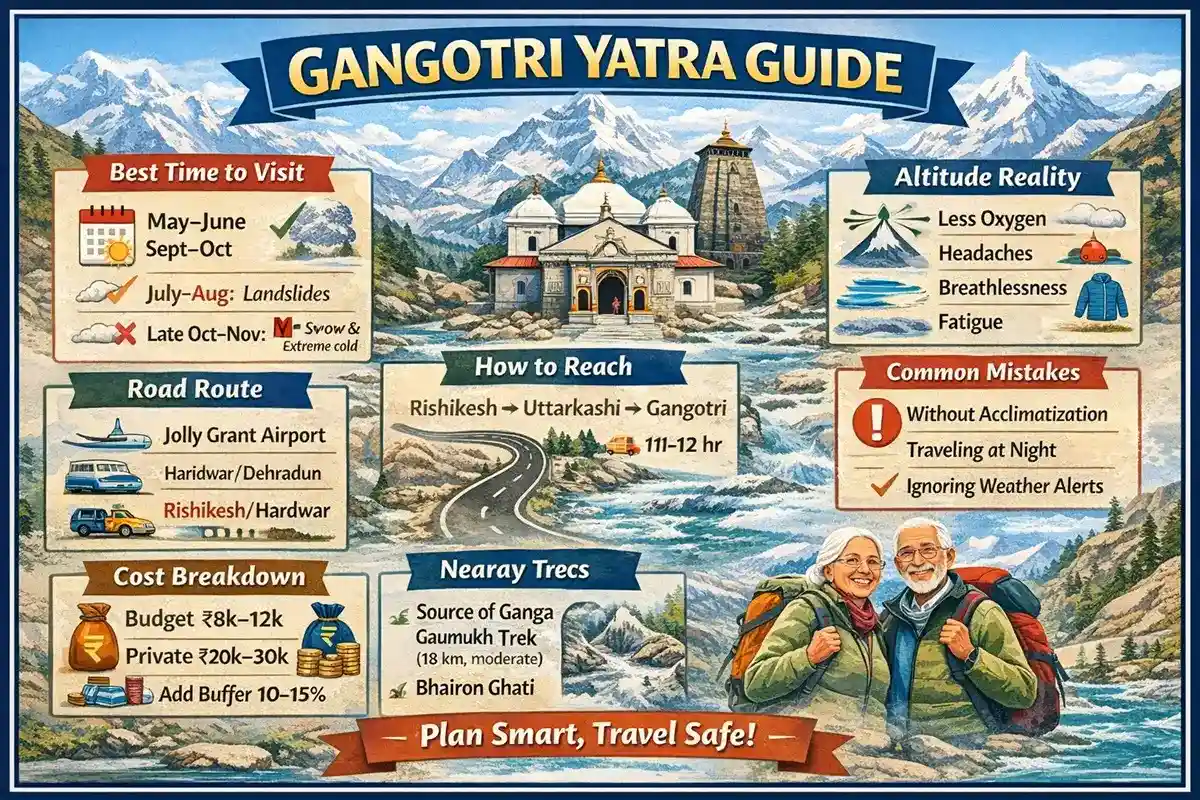
The Gangotri Yatra is one of the most spiritually significant pilgrimages in India, but on the ground it is also a serious Himalayan journey that demands preparation, patience, and physical awareness. This is not a weekend hill station trip. You are traveling deep into the Garhwal Himalayas where roads are narrow, weather shifts quickly, oxygen levels drop as you gain altitude, and facilities become limited beyond Uttarkashi.
Many travelers assume that since Gangotri is accessible by road, it must be easy. In reality, the altitude, long driving hours, and unpredictable mountain conditions require careful planning. If you prepare realistically, the Gangotri Yatra becomes peaceful and transformative. If you underestimate it, even small logistical issues can feel stressful.
This complete guide explains everything in detail — spiritual importance, geography, altitude science, best time to visit, route planning, cost breakdown, accommodation quality, food availability, registration process, trekking extensions like Gaumukh, safety measures, health precautions, packing guidance, common mistakes, and practical travel insights gathered from real Himalayan travel experience.

Spiritual Significance of Gangotri
Gangotri Temple is dedicated to Goddess Ganga, one of the most sacred rivers in Hindu tradition. According to ancient scriptures, King Bhagirath performed intense penance in this region to bring River Ganga down from heaven to cleanse the sins of his ancestors. Lord Shiva is believed to have received the force of the descending river in his matted locks before releasing it gently onto Earth.
While the temple marks the sacred point of worship, the physical origin of the river lies further ahead at:
Gaumukh
Gaumukh is the glacier snout from where the Bhagirathi River emerges. It is approximately 18 kilometers from Gangotri town and requires a moderate-level trek with forest department permission.
Gangotri is one of the four sacred shrines in the Uttarakhand Char Dham circuit, along with:
-
Yamunotri
-
Kedarnath
-
Badrinath
The temple opens every year on Akshaya Tritiya (usually April or early May) and closes on Bhai Dooj after Diwali. During winter months, due to heavy snowfall and complete road blockage, the idol of Goddess Ganga is shifted to:
Mukhba Village
Understanding this seasonal movement helps you plan your travel dates correctly.
Geography, Terrain & Altitude Reality
Gangotri is located at an altitude of approximately 3,100 meters (10,200 feet) above sea level. At this height, oxygen levels are noticeably lower compared to plains. The air feels thinner. Even mild physical activity can cause breathlessness if your body is not acclimatized.
The road from Rishikesh gradually climbs through steep mountain terrain, river valleys, sharp curves, and landslide-prone zones. As you cross Uttarkashi and move towards Harsil, the landscape becomes more alpine, with pine forests, snow peaks in the distance, and colder winds.
From practical travel experience, many people feel completely normal in Rishikesh but start experiencing mild fatigue after crossing 2,500 meters altitude. That is why staying one night in:
Uttarkashi
before reaching Gangotri is highly recommended. This simple step helps your body adjust gradually.
Common altitude-related symptoms include:
Walking slowly, drinking enough water, and avoiding sudden exertion are essential preventive measures.
Best Time to Visit Gangotri (Detailed Seasonal Analysis)
Choosing the right season significantly affects your Gangotri Yatra experience.
May to June – Peak & Pleasant Season
This is the most popular time. The temple opens around this period. Roads are generally stable, skies are clear, and the cold is manageable. However, since schools are on vacation, crowds are higher and accommodation prices rise.
July to August – Monsoon Risk
Heavy rainfall increases the risk of landslides, road blockages, and travel delays. Even if the temple remains open, reaching it can become unpredictable. From a safety perspective, this is not the ideal time unless absolutely necessary.
September to Mid-October – Best Balanced Window
Clear skies return after monsoon. Crowds reduce. The valley looks fresh and green. Weather remains stable though mornings become colder. This is often considered the best overall period for peaceful darshan.
Late October Onward – Severe Cold
Temperatures drop sharply. Snowfall risk increases. Facilities start closing. Travel becomes difficult.
How to Reach Gangotri (Expanded Route Explanation)
Step 1: Reach Uttarakhand
Nearest airport:
Jolly Grant Airport
Nearest railway access:
Haridwar Railway Station
From there, road travel begins.
Step 2: Road Journey to Gangotri
Standard Route:
Rishikesh → Chamba → Uttarkashi → Harsil → Gangotri
Total distance: Approx. 270 km
Actual travel time: 10–12 hours (depending on stops and traffic)
Route Segment Breakdown
| Segment |
Distance |
Travel Time |
Road Nature |
| Rishikesh–Uttarkashi |
170 km |
6–7 hrs |
Mountain curves |
| Uttarkashi–Harsil |
72 km |
3 hrs |
Narrow scenic valley |
| Harsil–Gangotri |
25 km |
1 hr |
High altitude stretch |
Mountain rule: Always start early morning. Driving after sunset increases risk due to low visibility and falling stones in certain stretches.
Registration & Entry Process
The Uttarakhand Government mandates biometric registration for Char Dham pilgrims.
Registration can be done:
You need:
-
Valid ID proof
-
Mobile number
-
Emergency contact
Registration enhances safety tracking in case of natural disruptions.
Detailed Cost Planning for Gangotri Yatra
Cost varies depending on travel style, accommodation choice, and group size.
Budget Travel Plan (3–4 Days)
| Expense Category |
Approx Cost Per Person |
| Shared Taxi |
₹4,000–₹6,000 |
| Budget Stay |
₹1,200–₹1,800 per night |
| Food |
₹600 per day |
| Miscellaneous |
₹1,000 |
| Estimated Total |
₹8,000–₹12,000 |
Private Vehicle Plan
| Category |
Cost Range |
| Sedan Taxi |
₹15,000–₹20,000 |
| SUV |
₹18,000–₹25,000 |
| Standard Hotel |
₹2,500–₹4,000 per night |
Comfortable / Deluxe Tour
₹25,000–₹40,000 depending on inclusions.
Add a 15% emergency buffer.
Accommodation Insights
Options include:
Staying in Harsil offers better comfort and slightly lower altitude for rest.
Rooms are simple. Do not expect luxury amenities.
Food & Basic Facilities
Food is vegetarian and simple.
Typical meals include:
-
Dal, roti, sabzi
-
Rice & rajma
-
Tea & snacks
Carry extra dry snacks and ORS.
ATMs are unreliable beyond Uttarkashi. Carry cash.
Health & Safety (In Depth)
Altitude management is critical.
Precautions:
Emergency medical facilities are available but limited in scale.
Senior citizens, heart patients, and those with respiratory issues must consult doctors before planning the Gangotri Yatra.
Gangotri Temple Darshan Experience
Temple opens early morning around 6 AM.
Best time for peaceful darshan: early morning.
Expect:
Evening aarti is spiritually powerful and highly recommended if weather permits.
Gaumukh Trek (Extended Experience)
The trek to Gaumukh is 18 km one way.
Permit required from forest department.
Trek details:
| Feature |
Details |
| Distance |
18 km |
| Difficulty |
Moderate |
| Permit |
Mandatory |
| Ideal Season |
May–June, September |
Only physically fit travelers should attempt.
Sample 6-Day Detailed Itinerary
Day 1: Arrival Rishikesh → Drive to Uttarkashi → Rest
Day 2: Acclimatization + Local sightseeing
Day 3: Uttarkashi → Gangotri → Darshan → Stay Harsil
Day 4: Optional Gaumukh partial trek or relax
Day 5: Return to Uttarkashi
Day 6: Return to Rishikesh
Add one buffer day for safety.
Packing Checklist (Expanded)
Clothing:
-
Thermal layers
-
Heavy jacket
-
Wool cap & gloves
-
Extra socks
-
Rain protection
Essentials:
-
Sunglasses
-
Sunscreen SPF 50+
-
Trekking shoes
-
Water bottle
-
Personal medicines
-
Power bank
Weather shifts quickly even in summer.
Common Mistakes Pilgrims Make
-
Ignoring weather forecast
-
Skipping acclimatization
-
Traveling at night
-
Overpacking heavy luggage
-
Not keeping buffer days
-
Relying fully on mobile network
Is Gangotri Yatra Safe?
Generally safe during open season if:
-
You avoid monsoon
-
Follow local advisories
-
Travel during daylight
-
Plan with buffer time
Landslides are natural in Himalayas. Stay flexible.
Final Thoughts
Gangotri Yatra is deeply spiritual yet physically demanding. It requires thoughtful preparation, respect for altitude, and realistic planning. With proper awareness and sensible travel decisions, it becomes a peaceful and transformative journey.