Last Updated on March 12, 2026
Every year, more than 50 lakh pilgrims leave behind their daily lives and make their way to the Garhwal Himalayas of Uttarakhand for one of the most spiritually significant journeys in Hinduism — the Char Dham Yatra. In 2026, with temple portals opening from April 19 onwards, the numbers are expected to reach new heights. If you’ve been thinking about doing this pilgrimage, this guide has everything you need — from registration to routes, packing lists to helicopter options — all updated with verified 2026 information.
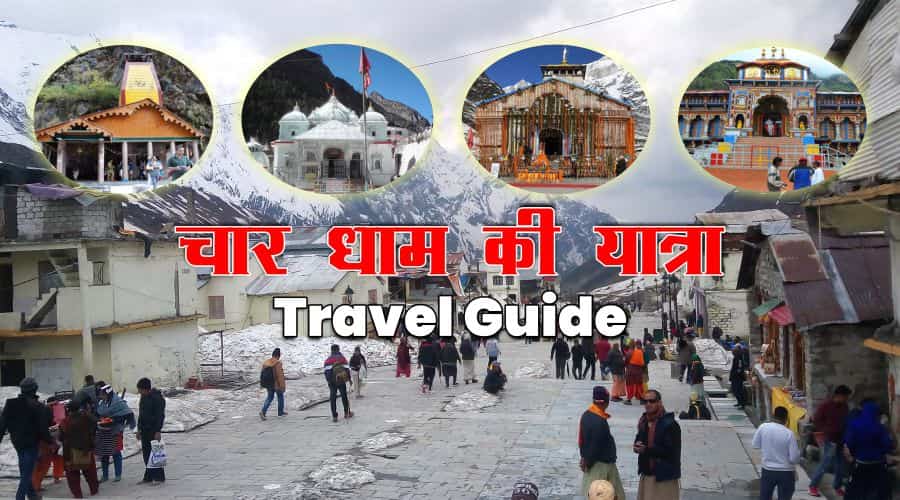
Char Dham Yatra covers four ancient temples — Yamunotri, Gangotri, Kedarnath, and Badrinath — nestled deep inside the Garhwal Himalayan ranges of Devbhoomi Uttarakhand. The traditional belief is that completing this circuit in the prescribed clockwise order cleanses the soul of sins and paves the path toward moksha — the ultimate liberation from the cycle of birth and rebirth. It is not just a pilgrimage. It is a journey inward.

Char Dham Yatra 2026 — Key Dates & Quick Facts
Before anything else, here are the confirmed 2026 dates announced by the Char Dham Temple Committee and the Uttarakhand Government:
| Temple / Detail |
Date / Information |
| Yamunotri Opens |
April 19, 2026 (Akshaya Tritiya) |
| Gangotri Opens |
April 19, 2026 (Akshaya Tritiya) |
| Kedarnath Opens |
April 22, 2026 at 8:00 AM |
| Badrinath Opens |
April 23, 2026 |
| Yamunotri Closes |
November 11, 2026 (Bhai Dooj) |
| Gangotri Closes |
November 10, 2026 |
| Kedarnath Closes |
November 11, 2026 (Bhai Dooj) |
| Badrinath Closes |
November 13, 2026 (Vijay Dashami) |
| Registration Start Date |
March 6, 2026 (Free, already open) |
| Registration Fee |
NIL — completely free |
| Official Registration Portal |
registrationandtouristcare.uk.gov.in |
| Offline Counter Opening |
April 17, 2026 (Haridwar, Rishikesh, Dehradun) |
| Annual Pilgrims (Expected) |
50 lakh+ (5 million+) |
| Duration by Road |
10–12 days from Haridwar |
| Duration by Helicopter |
5–6 days from Dehradun |
Both Yamunotri and Gangotri open on Akshaya Tritiya — one of the most auspicious dates in the Hindu calendar. The opening of Kedarnath was announced after traditional rituals at Omkareshwar Temple, Ukhimath, on Maha Shivratri.
Purpose of Char Dham Yatra — Why Pilgrims Come
Each of the four temples represents a distinct spiritual dimension, and together they complete a sacred circuit that has been undertaken by saints, sages, and seekers for centuries.
| Dham |
Deity |
Significance |
Altitude |
| Yamunotri |
Goddess Yamuna |
Source of River Yamuna; cleanses sins, grants peaceful death |
3,293 m |
| Gangotri |
Goddess Ganga |
Origin of River Ganga; purifies the soul; Bhagiratha’s penance site |
3,048 m |
| Kedarnath |
Lord Shiva |
One of the 12 Jyotirlingas; liberation from karma |
3,583 m |
| Badrinath |
Lord Vishnu (Badrinarayan) |
Vishnu’s meditation seat; one of 108 Divya Desams |
3,133 m |
The difficulty level is real. Kedarnath involves a 16 km trek from Gaurikund. Yamunotri has a 6 km climb from Janki Chatti. Badrinath and Gangotri are accessible by road, so they are manageable for most pilgrims. For those who are elderly, have health conditions, or simply have limited time, the helicopter option is a practical alternative.
Char Dham Yatra 2026 Registration
Registration is mandatory for ALL pilgrims in 2026 — whether you’re going by road, helicopter, or foot. There are no exceptions. The Uttarakhand Government has made this system compulsory since the devastating 2013 Kedarnath floods, and in 2026 it has been further strengthened with Aadhaar-linked biometric data.
What’s new in 2026: Aadhaar Card details are now mandatory for registration. The registration fee is NIL (free). Over 1.26 lakh people registered on March 6, 2026 alone — the first day of registration opening. If you haven’t registered yet, do it today.
How to Register — Step by Step
- Visit the official portal: registrationandtouristcare.uk.gov.in
- Create a new account using your mobile number (OTP verification)
- Select ‘Char Dham’ under Tour Type and enter your travel dates
- Add pilgrim details — name, age, Aadhaar number, photo
- Upload a scanned copy of your government ID (Aadhaar, Voter ID, Passport, or DL)
- Choose the Dhams you will visit and your planned visit dates for each
- Submit and receive your Yatra Registration Letter with a unique QR code
- Download or print your e-pass. Keep it on your phone and carry a printed copy
Other Ways to Register
| Method |
How to Use |
| Mobile App |
Download ‘Tourist Care Uttarakhand’ from Google Play or Apple App Store |
| WhatsApp |
Send ‘Yatra’ to +91-8394833833 and follow automated prompts |
| Toll Free Call |
Call 0135-1364 for guided registration assistance |
| Offline Counter |
Open from April 17, 2026 at Haridwar, Rishikesh, Dehradun, Sonprayag, Joshimath |
At every checkpoint along the route — Sonprayag for Kedarnath, Janki Chatti for Yamunotri, Pandukeshwar for Badrinath — officials called Yatrimitras will scan your QR code. No valid QR code means no entry. There are no workarounds.
Also: If you are booking a helicopter to Kedarnath, your Char Dham Registration Number is required before you can book a ticket on heliyatra.irctc.co.in. Registration first, helicopter ticket second — no exceptions.
How to Prepare for Char Dham Yatra
This is not a holiday in the hills. The terrain is unforgiving, the altitude is real, and the unpredictability of Himalayan weather makes physical and mental preparation non-negotiable.
Physical Preparation
- Start exercising at least 4–6 weeks before departure. Walking 3–5 km daily is the single most effective preparation.
- Add stair climbing to your routine — it mimics the actual temple treks far better than gym workouts.
- Practice yoga and breathing exercises. At 3,500 metres, your lung capacity matters more than your leg strength.
- If you have any existing heart, BP, lung, or diabetic conditions, get a medical check-up and clearance from your doctor before booking.
- Seniors (60+) and those with health issues must carry a Medical Fitness Certificate — it is checked at certain checkpoints. Children under 12 and adults over 65 require additional medical clearances.
Mental & Logistical Preparation
- Plan your dates thoughtfully. Do not book in haste. The weather window matters enormously — see the best time section below.
- Book your puja, accommodation, and taxi well in advance — especially for May and June. Things fill up 6–8 weeks before peak season.
- Know your route. Download offline maps — Google Maps works well, but connectivity in many stretches is unreliable.
- Keep emergency contacts saved: Uttarakhand Police: 112 | Char Dham Control Room: 0135-1364 | SDRF (State Disaster Response Force)
Best Time for Char Dham Yatra
The Yatra season runs from late April to early November. But not all months are created equal.
| Period |
Weather |
Crowd Level |
Verdict |
| Late April (post-opening) |
Cold, snow possible at high altitudes |
Low |
Spiritually charged; pack heavy warm clothes |
| May – mid June |
Pleasant 10°C–25°C, clear skies |
Very high (peak) |
Best weather; book everything 6–8 weeks early |
| July – August |
Heavy monsoon, landslides frequent |
Low (risky) |
Avoid — roads can close without warning |
| September – October |
Post-monsoon clarity, cool weather |
Moderate |
Best overall — clear skies, smaller crowds |
| November (before closing) |
Cold, occasional snowfall |
Very low |
Serene; only for hardy travellers |
In real life, late September and October offer the single best combination of clear mountain views, cooler temperatures, manageable crowds, and peaceful darshan. Many seasoned pilgrims deliberately skip the May–June rush and plan October visits instead.
Best Route for Char Dham Yatra from Haridwar — Day by Day
The traditional route follows the circuit from east to west: Yamunotri → Gangotri → Kedarnath → Badrinath. This is the prescribed sequence for maximum spiritual merit. The full road trip from Haridwar covers 1,600+ km across the Garhwal Himalayas.
10–11 Day Standard Road Itinerary
| Day |
Route |
Approx Distance |
Overnight |
| Day 1 |
Haridwar → Barkot (via Mussoorie) |
~176 km, 6 hrs |
Barkot |
| Day 2 |
Barkot → Janki Chatti → Yamunotri trek (6 km each way) → Barkot |
Trek 6 km each way |
Barkot |
| Day 3 |
Barkot → Uttarkashi |
~100 km, 4 hrs |
Uttarkashi |
| Day 4 |
Uttarkashi → Gangotri → Uttarkashi |
~100 km one way, 3.5 hrs |
Uttarkashi |
| Day 5 |
Uttarkashi → Guptkashi/Sitapur |
~200 km, 7 hrs |
Guptkashi |
| Day 6 |
Guptkashi → Sonprayag → Gaurikund → Trek to Kedarnath (16 km) |
16 km trek |
Kedarnath/Base Camp |
| Day 7 |
Kedarnath Darshan → Return to Guptkashi |
Return trek + drive |
Guptkashi |
| Day 8 |
Guptkashi → Badrinath (via Rudraprayag, Joshimath) |
~180 km, 7 hrs |
Badrinath |
| Day 9 |
Badrinath Darshan + Mana Village visit |
Local sightseeing |
Badrinath / Joshimath |
| Day 10 |
Badrinath → Rudraprayag → Haridwar |
~310 km, 9 hrs |
Home / Haridwar |
The route from Rishikesh follows: Rishikesh – Barkot – Janki Chatti – Yamunotri – Harsil – Gangotri – Sonprayag – Gaurikund – Kedarnath – Joshimath – Badrinath. Night driving on mountain roads is strictly prohibited between 8:00 PM and 6:00 AM — plan your day stages accordingly.
Getting to Each Dham — Detailed Routes
Kedarnath: 207 km from Rishikesh. Drive to Gaurikund, then 16 km trek on foot, or choose pony/palki. Route: Rishikesh – Devprayag – Rudraprayag – Augustmuni – Ukhimath – Phata – Sonprayag – Gaurikund – Kedarnath Temple.
Badrinath: 400+ km from Rishikesh. Easily reachable by cab, Tempo Traveller, or bus. Parking is just 1 km from the temple entrance with clear signage throughout. Route: Rishikesh – Devprayag – Srinagar – Nandprayag – Pipalkoti – Joshimath – Badrinath.
Gangotri: Under 300 km from Rishikesh. Good road access via multiple transport options. Route: Rishikesh – Shivpuri – Devprayag – Gangnani – Harsil – Dharali – Gangotri.
Yamunotri: Drive to Janki Chatti (last motorable point), then 6 km trek or pony/palki. Route: Rishikesh – Dehradun – Mussoorie – Barkot – Janki Chatti – Yamunotri.
Char Dham Yatra by Helicopter — Full Guide
The helicopter option has transformed this pilgrimage for elderly devotees, those with health limitations, and anyone with limited leave. A journey that takes 10–12 days by road can be completed in 5–6 days with far less physical strain. In 2026, helicopter bookings are already open and filling fast.
Helicopter Package Cost — 2026
| Package Type |
Duration |
Cost Per Person (Approx.) |
Includes |
| 4 Dham Full Package (Standard) |
5 Nights / 6 Days |
₹1,90,000 – ₹2,35,000 |
Heli transfers, VIP darshan, hotels, meals |
| 4 Dham Full Package (Premium) |
5 Nights / 6 Days |
₹2,35,000 – ₹3,15,000 |
Luxury hotels, all inclusions + extras |
| Do Dham (Kedarnath + Badrinath) |
3 Nights / 4 Days |
₹85,000 – ₹1,20,000 |
Heli transfers, darshan, basic stay |
| Kedarnath Only (Shuttle – One Way) |
Same day |
₹3,000 – ₹3,500 one way |
Shuttle from Phata/Sersi/Sitapur helipad |
| Kedarnath Only (Shuttle – Return) |
Same day |
₹5,000 – ₹6,500 return |
Return shuttle from Kedarnath helipad |
Important: IRCTC manages only Kedarnath helicopter shuttle tickets (heliyatra.irctc.co.in). Full Char Dham helicopter packages are operated by DGCA-approved private operators. All bookings for the full package depart from Sahastradhara Helipad, Dehradun.
Helipads Near Each Dham
| Dham |
Helipad Location |
Distance to Temple |
Transfer |
| Yamunotri |
Kharsali Village |
~6 km trek from helipad |
Pony/palki or trek |
| Gangotri |
Harsil / Jhalla |
~24 km by road |
Cab transfer included |
| Kedarnath |
Phata / Sersi / Sitapur / Gupt Kashi |
~500 m to temple (final helipad) |
Walk or shuttle |
| Badrinath |
Badrinath Helipad |
~1 km from temple |
Cab transfer included |
For helicopter travel: VIP darshan passes are provided at the helipads upon landing — you do not need to stand in the general queue. Passengers must comply with the 80 kg weight limit (including luggage). Infants below 2 years travel free but count toward group weight. Physical printouts of helicopter tickets are mandatory — digital screenshots are not accepted.
Char Dham Yatra 2026 — Cost Breakdown
| Travel Type |
Budget Range Per Person |
What It Includes |
| Budget Road Package (Shared) |
₹18,000 – ₹25,000 |
Shared taxi, basic stay (dharamshala), no meals |
| Standard Road Package (Private Taxi) |
₹40,000 – ₹60,000 |
Private cab, 2–3 star hotels, meals |
| Deluxe Road Package |
₹60,000 – ₹90,000 |
Private cab, 3-star hotels, better meals, guide |
| Helicopter Package (Standard) |
₹1,90,000 – ₹2,35,000 |
Heli, VIP darshan, premium hotels, all meals |
| Helicopter Package (Luxury) |
₹2,35,000 – ₹3,15,000 |
All of above + luxury properties, extras |
| Add-on: Kedarnath Pony / Palki |
₹2,500 – ₹7,000 (per person) |
Pony, palki, or pithu service on the 16 km trek |
| Add-on: Yamunotri Pony / Palki |
₹1,500 – ₹3,000 (per person) |
Pony or palki for the 6 km climb |
What to Pack — Char Dham Yatra Essentials Checklist
Packing wrong for a Himalayan pilgrimage is one of the most common — and costly — mistakes pilgrims make. Below is a ground-level, practical packing list for Char Dham Yatra 2026:
Medical Kit (Top Priority)
- Prescription medicines — if you take any, carry 2 weeks’ extra supply
- Diamox (acetazolamide) for altitude sickness — consult your doctor before taking
- Anti-fever, paracetamol, antacids, anti-diarrheal, ORS sachets
- Cough and cold medicine, throat lozenges
- Band-aids, antiseptic cream, pain-relief spray (for knee and back)
- Motion sickness tablets — the mountain roads involve continuous hairpin bends
- Small pulse oximeter — checks blood oxygen levels at altitude; very helpful
Clothing & Gear
- Thermal inners (top and bottom) — mandatory even in May
- 3–4 warm mid-layers: fleece jackets or woollen sweaters
- Waterproof outer jacket / windcheater — sudden rain and hail are common
- Warm gloves, woollen socks (minimum 3 pairs), monkey cap / balaclava
- Trekking shoes with ankle support — non-negotiable for Kedarnath and Yamunotri treks
- Sunglasses (UV-400 rated) — the sun at 3,500 m is brutal
- Lightweight, comfortable kurta/salwar for darshan at temples
Documents & Technology
- Char Dham Yatra e-Pass — printed copy + digital copy on phone
- Original Aadhaar / Voter ID / Passport — original, not photocopy
- Helicopter ticket printout (if applicable) — digital screenshots NOT accepted
- Power bank — charging points are unreliable above Joshimath and Uttarkashi
- Cash — minimum ₹10,000 extra per person. ATMs in Kedarnath and Badrinath can run empty
- Offline maps downloaded on Google Maps before departure
Accommodation Options Along the Char Dham Route
Managing expectations about accommodation is critical. These are high-altitude, remote, seasonal settlements — not resort towns.
| Location |
Accommodation Options |
Quality Range |
| Barkot (Yamunotri base) |
GMVN rest house, private guesthouses, camp stays |
Basic to mid-range |
| Uttarkashi (Gangotri base) |
GMVN Tourist Bungalow, private hotels, dharamshalas |
Mid-range available |
| Harsil / Gangnani |
Private guesthouses, camp cottages |
Basic to comfortable |
| Guptkashi / Sitapur (Kedarnath base) |
Private hotels, GMVN options |
Mid-range to comfortable |
| Sonprayag / Gaurikund |
Basic dharamshalas, tented camps |
Basic |
| Kedarnath (at summit) |
Dharamshalas, GMVN camp |
Basic |
| Joshimath / Badrinath |
Hotels of all ranges, GMVN, ashrams |
Wide range available |
The general rule on the ground: the closer you stay to the temple, the more basic the facilities. If you want a hot shower and a proper bed, stay in the base towns (Uttarkashi, Guptkashi, Joshimath) and make day trips to the temples.
Food Facilities Along Char Dham Route
Non-vegetarian food is not served anywhere on the Char Dham circuit — this is a religious pilgrimage route and the rule is strict. Alcohol is also prohibited.
What you’ll find in abundance: dal-chawal, sabzi-roti, rice meals, simple Indian thalis, Maggi, noodles, soups, parathas, and tea. As you get higher (Kedarnath, Badrinath), options get simpler and prices get higher — a basic meal costs ₹150–₹300.
Carry some packaged food — glucose biscuits, dry fruits, energy bars, and instant oats — for stretches where dhabas are sparse. At Kedarnath especially, heavy meals at altitude can cause nausea. Eat light.
Safety Tips — Things That Actually Matter
- Never demand or allow night driving. Roads between 8:00 PM and 6:00 AM are prohibited and genuinely dangerous. Experienced hill drivers will refuse — respect that.
- Leave early from each stop. Departures by 5:00–6:00 AM avoid afternoon traffic jams near Sonprayag and Joshimath.
- Follow Uttarakhand Police weather alerts in real time — their social media handles post landslide and road closure updates quickly.
- Do not cross checkposts or enter restricted areas under any circumstances during weather alerts.
- Mobile networks (Jio and Airtel work best) become patchy above Joshimath and Gaurikund. Inform family of your daily itinerary before departure.
- SDRF (State Disaster Response Force) camps are stationed at key points. Know their locations — your tour manager should be able to tell you.
- Altitude sickness starts with headache, dizziness, and shortness of breath. If symptoms occur — descend immediately. Do not push through.
Medical Facilities Along the Char Dham Route
Emergency care is better than many pilgrims expect, but still limited by terrain and weather access:
- Kedarnath: Fully functioning hospital at the base. Oxygen and emergency medical camps are set up en route during peak season.
- Badrinath: Medical facility available near the temple premises.
- Gangotri and Yamunotri: Medical camps during the season; more basic facilities.
- Base towns (Uttarkashi, Rudraprayag, Joshimath): Proper district hospitals with better equipment.
If you need an oxygen cylinder arrangement, inform your tour operator while booking — they can arrange it. Do not assume it will be available on-the-spot at every location.
Common Mistakes Pilgrims Make — and How to Avoid Them
- Not registering in advance — the QR code is checked at multiple checkpoints. Doing this at the last minute creates panic and delays.
- Booking through unverified WhatsApp agents — fake puja slots, fake VIP darshan passes, and fraudulent helicopter bookings are reported every season. Use only official portals.
- Underestimating the Kedarnath trek — 16 km at 3,500 m altitude is very different from 16 km on flat ground. Prepare seriously.
- Overpacking and dragging heavy luggage — for helicopter travel, the limit is 5 kg per person. For road travel, light luggage makes the trek infinitely easier.
- Skipping altitude acclimatisation — if possible, spend a night at Joshimath before ascending to Badrinath and give your body time to adjust.
- Going in July or August without checking road conditions — landslides can strand groups for days. Monitor the Uttarakhand Tourism portal before travel.
Frequently Asked Questions
Q-1: When does Char Dham Yatra 2026 start?
The Yatra begins April 19, 2026 with the opening of Yamunotri and Gangotri on Akshaya Tritiya. Kedarnath opens April 22 and Badrinath on April 23, 2026.
Q-2: Is Char Dham registration free in 2026?
Yes — completely free. The Uttarakhand Government has made registration NIL-cost in 2026. Do not pay any agent, website, or individual claiming to charge a fee for Char Dham registration. The only valid portal is registrationandtouristcare.uk.gov.in.
Q-3: Can I do Char Dham Yatra by helicopter if I am a senior citizen?
Yes — the helicopter package is designed precisely for senior citizens and those with physical limitations. It covers all four Dhams in 5–6 days from Dehradun, with VIP darshan, wheelchair assistance at helipads, and priority boarding. Operators include oxygen support and medical kits as standard. It costs ₹1,90,000 to ₹2,50,000 per person all-inclusive.
Q-4: How many days are needed for Char Dham Yatra?
Minimum 10–12 days by road from Haridwar/Rishikesh. By helicopter, 5–6 days from Dehradun. A Do Dham trip (Kedarnath + Badrinath only) takes 5–7 days by road.
Q-5: Where can I collect the VIP darshan pass for helicopter pilgrims?
If you are travelling by helicopter, your VIP darshan pass is issued at the helipad upon landing. You do not need to collect it from a separate counter. This pass allows you to bypass the general darshan queue and enter the temple directly from the designated VIP entry point.
Q-6: What is the total cost of Char Dham Yatra 2026?
Costs range from ₹18,000–₹25,000 per person for budget shared road packages to ₹2,35,000–₹3,15,000 for premium helicopter packages. A standard 10-day private road package with Innova and 3-star hotels costs ₹40,000–₹60,000 per person. Add pony/palki costs (₹2,500–₹7,000 per person at Kedarnath) and personal expenses.
Q-7: What happens if temples close due to weather during my Yatra?
Temporary closures due to heavy snow, rain, or landslides happen every season — especially at Kedarnath and Yamunotri. Most operators have a buffer day built into packages for this reason. If road closures last longer, SDRF assists stranded pilgrims. Always carry 1–2 extra days of flexibility in your schedule and never buy non-refundable tickets for the Yatra return.
Final Word — Plan Early, Travel Prepared, Arrive with Faith
The Char Dham Yatra is the kind of journey that stays with you long after you return home. The mountains are humbling. The temples are ancient and alive. And the experience of standing before the Shivlinga at Kedarnath or the idol of Badri Vishal — after days of travel, trekking, cold, and patience — is unlike anything else.
In 2026, with 50+ lakh pilgrims expected, the key to a smooth experience is simple: register early, plan your dates thoughtfully, book your transport and stay in advance, and prepare your body and mind for what the Himalayas will ask of you.