Last Updated on February 19, 2026
Planning Char Dham Yatra without understanding the weather is risky. Not inconvenient — risky.
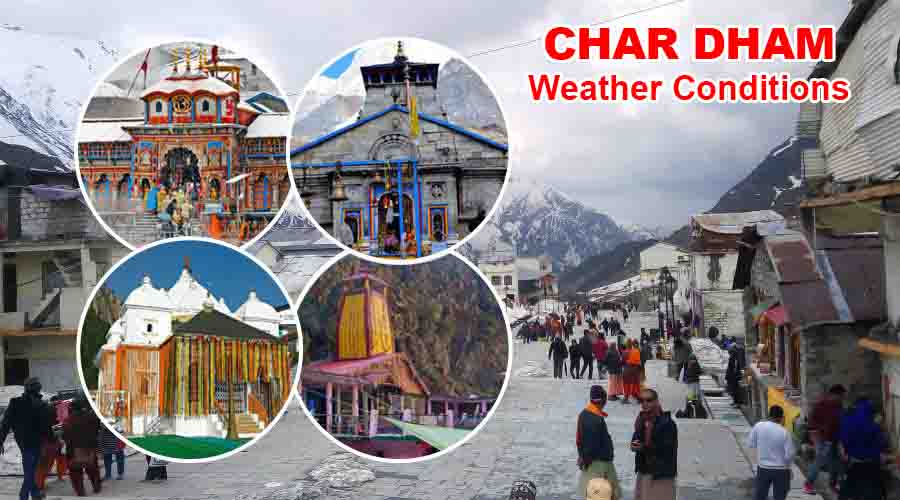
The four sacred shrines — Kedarnath Temple, Badrinath Temple, Gangotri Temple and Yamunotri Temple — are located in the high-altitude Garhwal Himalayas of Uttarakhand. Weather here is not linear. It shifts fast. Morning sunshine can turn into afternoon rainfall. Clear roads can close overnight during monsoon.
If you understand the seasonal pattern properly, your yatra becomes smooth and stress-free. If not, even darshan timing, hotel bookings, and helicopter schedules can get disrupted.
Let’s break it down dham-wise and month-wise.

Kedarnath & Badrinath Weather Conditions
Kedarnath (approx. 3,583 meters) and Badrinath (approx. 3,300 meters) experience similar climate patterns due to altitude and location. Nights are colder than people expect, even during peak season.
Winter Season (November to March)
During these months, the entire region remains snowbound.
-
Temperature often drops below 0°C
-
Heavy snowfall blocks routes
-
Temple doors remain closed
-
Pilgrimage officially suspended
The idols are shifted to winter seats as per tradition. No regular tourism operates in this period.
This is complete off-season.
Pre-Opening Phase (April)
April is a transition month. Snow starts melting and road restoration begins.
-
Temperature ranges between 5°C and 15°C
-
Cold mornings and evenings
-
Limited accessibility early in the month
Temple opening usually happens toward late April or early May depending on the Hindu calendar.
If visiting early season, thermal wear is essential.
Peak Yatra Season (May & June)
This is considered the best weather window.
May offers pleasant weather with manageable crowds. June is slightly warmer but more crowded. From practical experience, the first half of June is more stable than the last week when monsoon signals begin.
For families and senior citizens, this period is ideal.
Monsoon Season (July & August)
This is the most sensitive phase.
Temperature remains between 7°C and 15°C, but comfort is not the issue — safety is. Kedarnath valley is especially vulnerable during heavy rain.
Travel during peak monsoon is not recommended unless necessary.
Post-Monsoon (September & October)
September brings clarity after rains.
October becomes colder but still accessible.
Many experienced travelers prefer mid-September for peaceful darshan.

Gangotri & Yamunotri Weather Conditions
Gangotri and Yamunotri follow similar seasonal patterns but feel slightly different due to terrain. Yamunotri requires a 6 km trek, making weather even more important.
Winter (November to March)
-
Heavy snowfall
-
Sub-zero nights
-
Trek routes blocked
-
Temple closed
Darshan is not possible.
April – Cold but Improving
Snow clears gradually. Weather improves during daytime but remains cold in mornings.
Temple gates generally open late April or early May.
Best Season (May & June)
This is the most favorable period.
This window offers the safest combination of climate and accessibility.
Monsoon (July & August)
-
Heavy rainfall in Uttarkashi region
-
Slippery trekking route (Yamunotri)
-
Risk of landslides
-
Temporary travel suspension possible
Pilgrims must check weather updates before travel.
September & October
Post-monsoon weather becomes stable again.
-
Clear views
-
Moderate cold
-
Lower crowd density
October gradually becomes colder and may see early snowfall.
Char Dham Weather Comparison Table
Below is a practical side-by-side comparison of all four shrines:
| Month |
Kedarnath |
Badrinath |
Gangotri |
Yamunotri |
Travel Advice |
| Jan |
Heavy Snow |
Snowbound |
Snowbound |
Snowbound |
Closed |
| Feb |
Extreme Cold |
Extreme Cold |
Snowfall |
Snowfall |
Closed |
| Mar |
Snow Melting (Late) |
Snow Melting |
Very Cold |
Very Cold |
Closed |
| April |
Cold (5–15°C) |
Cold |
Cold but Improving |
Cold but Improving |
Opening Prep |
| May |
Pleasant (7–18°C) |
Pleasant |
Ideal |
Ideal |
✅ Best Time |
| June |
Stable (10–20°C) |
Stable |
Warm & Clear |
Warm & Clear |
✅ Excellent |
| July |
Rain Starts |
Rain |
Monsoon |
Monsoon |
⚠ Risky |
| August |
Heavy Rain |
Heavy Rain |
Heavy Rain |
Heavy Rain |
❌ Avoid |
| Sept |
Clear & Fresh |
Pleasant |
Stable |
Stable |
✅ Very Good |
| Oct |
Cold |
Cold |
Cold |
Cold |
Manageable |
| Nov |
Snow Begins |
Snow Begins |
Closed |
Closed |
Closed |
| Dec |
Snowfall |
Snowfall |
Snowfall |
Snowfall |
Closed |
Quick Weather Comparison Insights
If we compare practically:
-
Coldest Overall: Kedarnath
-
Most Stable During Season: Badrinath
-
Most Weather-Sensitive Trek: Yamunotri
-
Best Visual Experience: Gangotri in September
Best Time to Visit Char Dham
Based on safety, comfort, and accessibility:
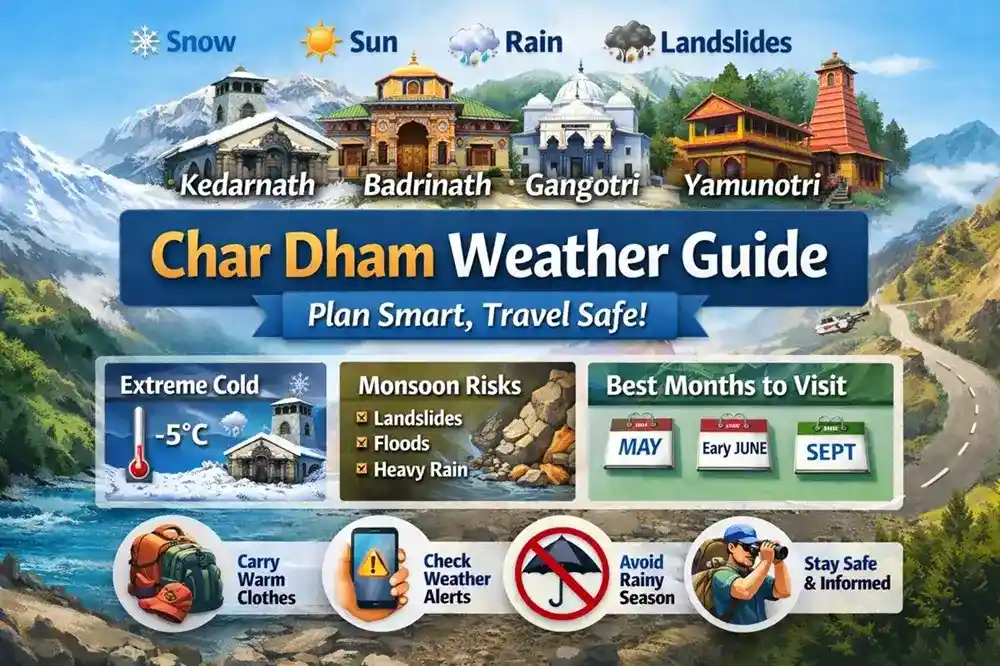
Most Recommended Months:
-
May
-
Early June
-
Mid to Late September
Avoid If Possible:
Closed Period:
From ground-level travel coordination experience, early June and mid-September offer the best balance between stable weather and manageable crowds.
Suggested Tour: